
How Woodstock Arts' Patron Experience Turns First-Timers Into Lifelong Fans


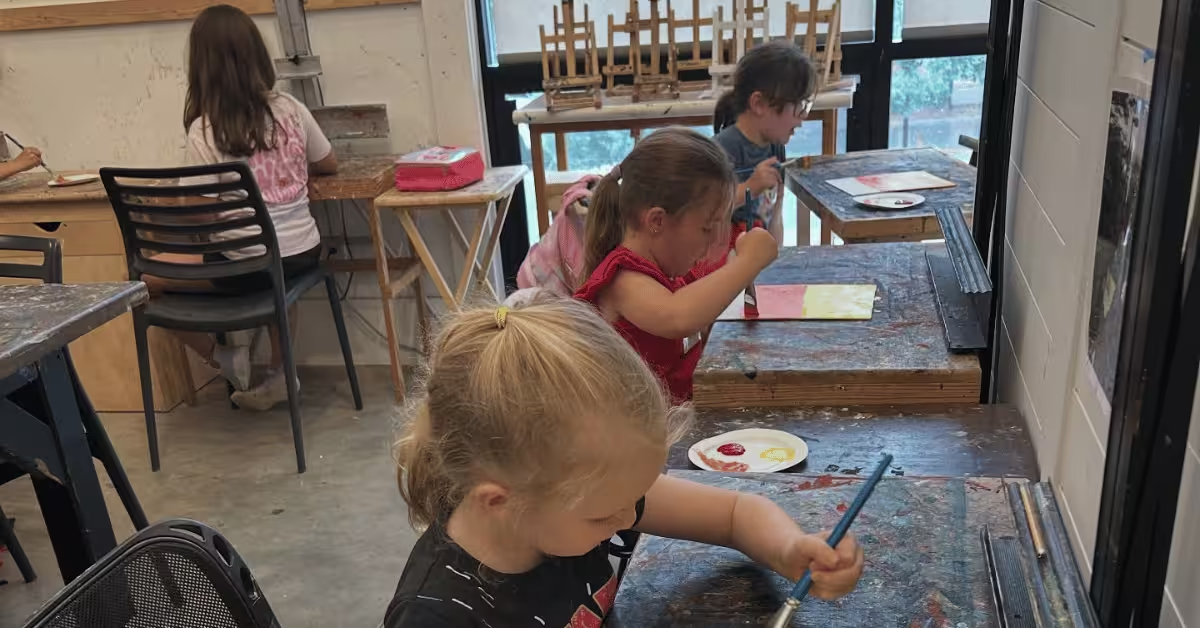
When it comes to the patron experience, the quality of your programming matters. But so does everything around it: how someone finds your organization, how easy it is to sign up or purchase, and what happens before, during, and after a class or performance. The patron experience is the sum of all these touchpoints, and each one can make or break a visitor's decision to come back.
So, how do you design it well? Christopher Brazelton, Executive Director at Woodstock Arts, has spent the last year working on exactly that.
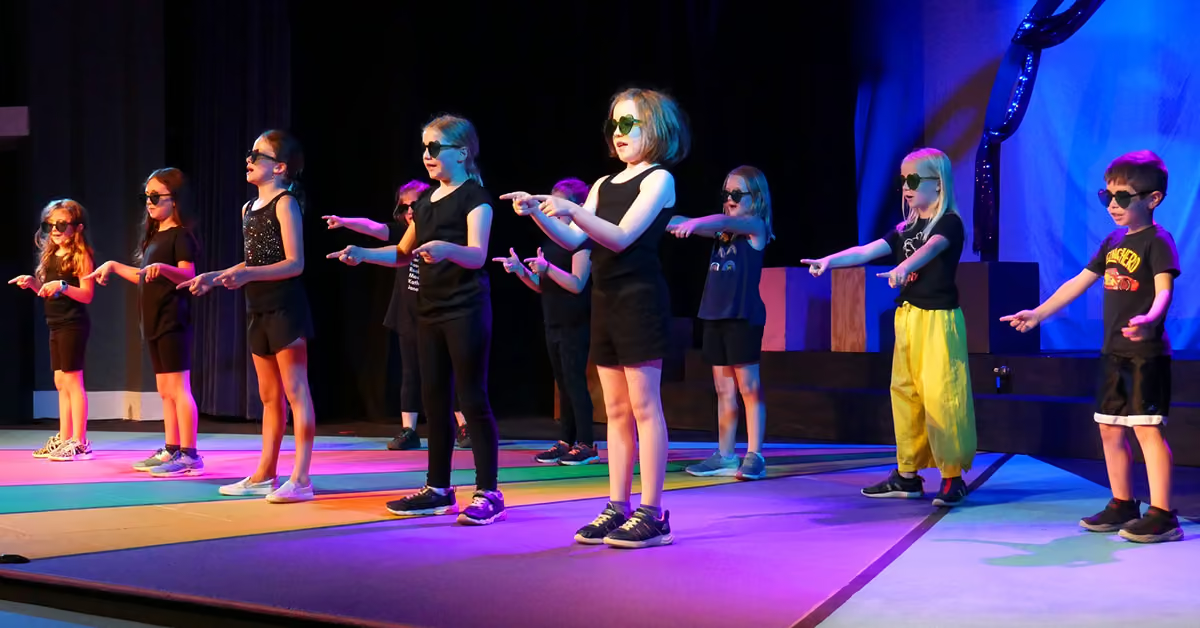
Woodstock Arts is a multidisciplinary arts center that runs theater, music, visual arts, and education programming under one roof. The education program alone carries over 200 classes and workshops a year, plus seven weeks of summer camp across visual arts and theater. Their pottery center is so full that Christopher jokes his team is running the historical building "into the ground" because of how many people are inside at any given moment.
High demand is a good problem to have, but it also exposed the cracks in their patron experience. At a smaller scale, a clunky signup flow or a generic welcome email is easy to look past. But as Woodstock scaled their operations, those friction points started costing registrations.
Here's how Woodstock Arts rebuilt the patron journey, from the first touchpoint to the long-term relationship, and what other arts leaders can take from their approach.
Discovery: How patrons find Woodstock Arts
Reaching a new visitor and re-engaging a returning one are two different jobs, and Christopher runs a three-pronged approach that treats them that way.
- Meta ads for reaching brand-new audiences. This is Christopher's top channel for reaching new people. He starts by targeting parents in the area and adds interests like theater, musicals, or specific shows to narrow the field to people more likely to care about what Woodstock offers.
- Direct mail to family-dense neighborhoods for new visitors. The Woodstock Arts team sends postcards to areas with lots of families, looking for signs like backyards instead of condos and walkable apartment complexes. A "you're new to the neighborhood, check out our classes" postcard lands better when it shows up in the right place.
- Email newsletter for returning patrons. Christopher's team approaches registration days like events. For summer camps, they send a note telling families exactly when registration opens, down to the hour. Families mark the date on their calendars and tell their friends, so by the time it goes live, demand is already there.
Discovery works best when leaders know the right channel for the right audience at the right moment. Figure out what groups make most sense for you to target and where those people already are, then create and optimize a path for each.
The web experience: Streamlining the path to registration
Once someone clicks through to your website, you only have a small window to turn their interest into a registration. A confusing layout or a clunky signup flow can be enough to lose them.
With this in mind, Christopher knew their old setup wasn’t cutting it.
- The problem. Woodstock's visitors had to leave the main site, land in a separate catalog, and sift through the full list of classes to find what they were looking for. And staff were setting up every class twice: in their registration platform and on the website. Christopher said the team kept hearing the same thing from parents: 'I'm confused. Help me out.' When the questions kept coming, it was clear people were struggling to check out. And for every frustrated visitor who emails or calls, there are more who simply drop off.
- The fix. Christopher's team partnered with a web dev agency to embed CourseStorm directly into their website with all of the functionality they wanted for patrons and admins. Now, when staff set up a class in CourseStorm, it auto-populates on the Woodstock Arts website exactly where they want it. Visitors can browse classes inside the main site and click straight to registration, without ever leaving Woodstock's branded experience.
- The payoff. For patrons: a shorter, cleaner path from “I’m interested in a class” to “I’m registered.” For the education team: time back and enrollment growth. Setting up every class once instead of twice frees them up for higher-value work like instructor relationships, curriculum, and community building.
The smoother your systems, the better it is for everyone involved. To start, try going through your own registration flow from a patron's point of view. Time it. Count the clicks. Note where you'd hesitate or get confused. Every break in the flow is a place you could be losing registrations.

Want a similar experience on your site? CourseStorm offers a fully customizable Javascript widget that allows organizations to embed catalogs directly into their site. Talk to our team to find out more!
The first visit: Designing for new patrons
Christopher's team has a simple process to make a visitor’s first interaction with Woodstock Arts memorable.
- Step 1: Identify first-timers. A custom Spektrix (Woodstock’s ticketing and CRM platform) report flags new event attendees and their registration system does the same for new students.
- Step 2: Give a personalized thank you note. Typically something like "thanks for joining us, we're glad you're here." For ticketed events, staff leave an actual handwritten note at the patron's seat. For classes, the team sends a note designed to look handwritten, often paired with a $20 voucher for their next class.
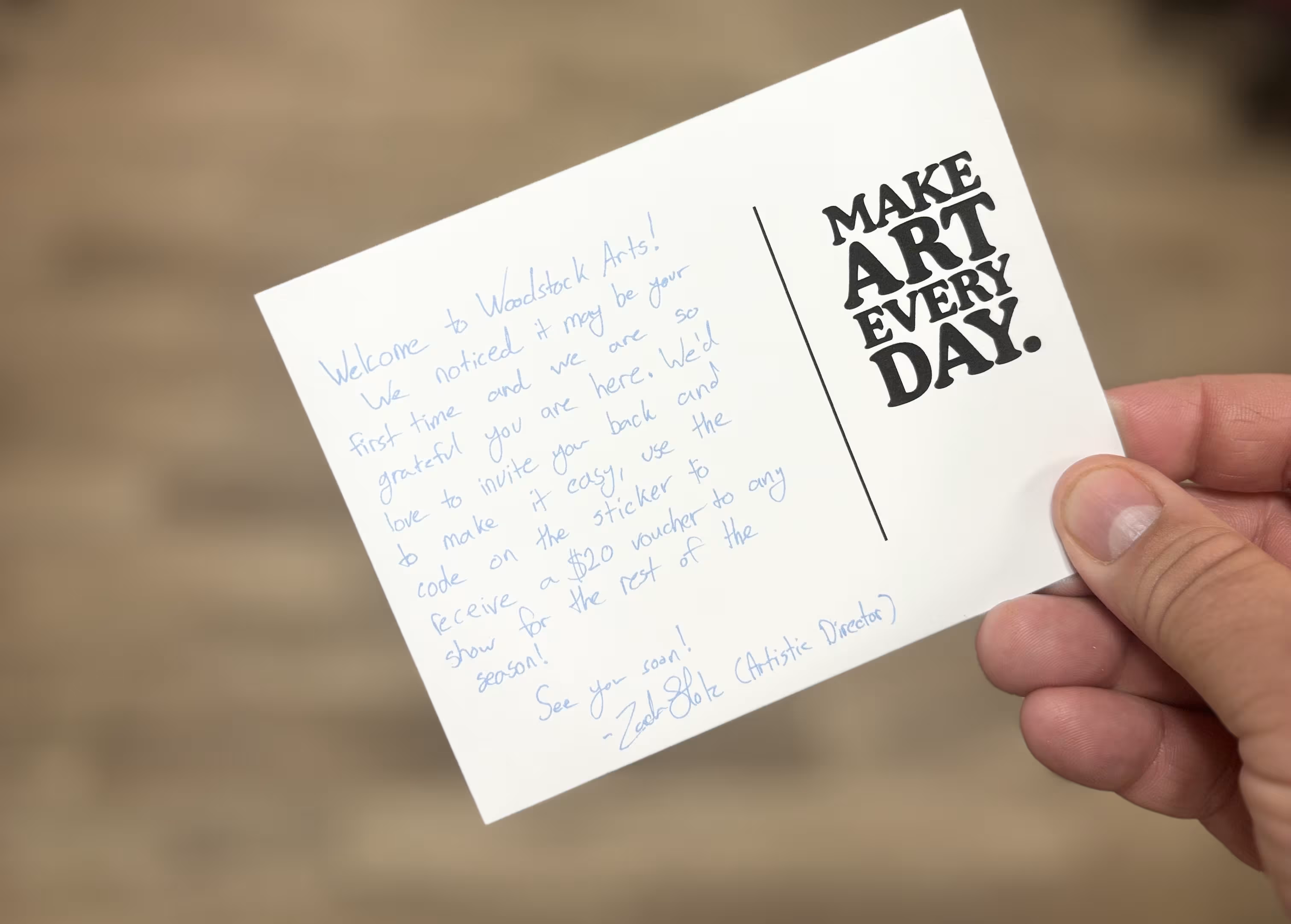
Christopher calls this approach "experience-centric." The art itself, the teaching, and the curriculum should all be excellent by default, and he holds Woodstock’s patron experience to the same bar.
To apply this thinking to your own org, look at how you currently welcome first-time patrons. Is it different from what a returning patron gets? If not, that's the first thing to fix. Even a short, personal note can make someone feel seen and appreciated, and that's often what determines whether they come back.
In class and after: Building community in the room and beyond
Christopher's team sees in-class time as one part of the broader patron experience, treating the time around it with as much care as the programming itself.
What that looks like, concretely:
- Training teachers to build community. His team is coaching teaching artists on how to help students connect with each other, not just with the instructor, so the class community holds together even when a teacher takes a session off or moves on.
- Small classes by design. Woodstock's spaces are small, and so are its classes. Christopher's team has leaned into a boutique model, aiming for a high retention rate by keeping each class tight-knit.
- Take-home sheets for kids' classes. The ed team sends a sheet home with kids after class with specific questions for parents to ask. The goal is to help parents engage with their kids around what they’ve learned, making the experience more meaningful for everyone. As Christopher says, ask a kid, "What did you learn?" and they'll say, "I don't remember." But give parents a specific question to ask, even a yes-or-no one, and it's enough to get a real conversation going.

What happens in the 24 hours after one of your classes ends? Do parents have anything to talk about with their kid besides "how was it?" Do students leave with a way to stay connected with the people they just spent an hour or more with? If the answer is no, this may be an area to optimize.
Patron loyalty: Membership and the role of education
For a lot of arts organizations, membership benefits focus on discounted ticket or class prices. That's an amazing benefit but it's not the only benefit you can offer your patrons.
Woodstock Arts' membership bundles quite a few benefits, including complimentary access to performances and exhibits, priority seating and early access to ticket sales, member-only events, discounts on merch, and more. It works like a Netflix subscription with monthly or annual payment options and single, dual, and family tiers.

What makes it work:
- Pricing based on actual spending data. Christopher's team looked at what their top-spending households already paid per year on individual tickets and classes, then set a subscription price slightly below that. Patrons feel like they're getting a deal. Woodstock gets more predictable revenue.
- First access is a premium benefit. Woodstock's pottery classes and summer camps fill up fast. Christopher says several members joined the membership program just to make sure they could get into the classes they wanted.
The result is a membership experience that's connected to what patrons want and their real purchasing behavior, and incentivizes loyalty and continued engagement with Woodstock's many programs.
Consider how you can tailor your membership program to the things your patrons care most about and to the spending habits and behaviors you want to incentivize. It's all about ensuring the perks match up with member preferences so dig into your patrons' purchasing patterns and keep the lines of feedback between you and your community open. And remember: It may take a few iterations to get your membership program just right!
The feedback loop: Iterating on the patron experience
Designing a strong patron experience isn't a one-time job. Christopher's team is constantly looking at what's working and what isn't, then adjusting from there.
One pattern they spotted recently: satisfaction surveys had high scores, but renewals were low. Even though patrons were happy with their classes, they weren’t signing up again.
They interviewed some of the community to find out what was going on and learned that students were happy with their classes and wanted to come back but they had a timing problem. By the time a new session opened for registration, many patrons had already made other commitments.
So the Woodstock team made a few changes:
- Fall registration windows align with parent behavior. Parents signing up for camp can register for the first fall session on the spot, while they're already at Woodstock thinking about kids' activities. Registration for the second fall session also opens later, right when school starts and parents are scrambling to fill extracurricular time.
- Winter and spring merged into one session. Parents are thinking about classes in January and February. By March, they've moved on to planning for summer. So Christopher's team combined the winter and spring sessions into one, with the registration window landing in the January–February period when parents are paying attention.
The takeaways for other arts organizations? Have multiple ways to collect patron feedback. Surveys, enrollment data, and patron conversations each tell you something different. If two sources tell you different things, that's your cue to dig in.
How to start improving your own patron experience
The patron experience is always a work in progress. The Woodstock Arts team already has a few more updates in motion, like trial visual arts workshops that funnel into classes, and free farmers' market shows to reach new families.
What ties all of this together is a simple habit: Christopher's team stays curious. They regularly look for ways to improve the patron experience, prioritize their highest impact opportunities, and act on those opportunities.
If you're trying to figure out where to start to improve your organization's patron experience, look for your biggest drop off points. Ask questions like:
- Are you having trouble attracting new patrons? (If yes, what other discovery channels can you explore?)
- Are you losing people after their first performance or class? (If yes, how can you use the first time experience to get them back?)
- Are there demographic groups you're seeing more or less of? Is there opportunity to reach other groups? (If yes, which groups and how can you reach them)
- Do you have a good sense of patron satisfaction? (If no, you may need better feedback mechanisms.)
- What are other similar organizations doing to grow and better serve their communities? (Look to your peers for fresh ideas!)
If you're looking for my ideas to improve your arts education program and use it to boost your entire organization, our “How to build a thriving arts program” guide is a useful next step!

Save time and grow your impact with CourseStorm

