
Performing Arts Education: What 3 Leading Programs Get Right


.png)
The arts have never been more important than they are now.
Folks need safe spaces to connect, to feel, to build empathy, to belong—and arts organizations have long provided those spaces. Today, however, people need a compelling reason to leave their homes and gather. Live performance offers one reliable avenue to get people in the door. But education is becoming more and more important as organizations leverage classes, camps and workshops to 1) reach and engage totally new patrons and full families and 2) keep patrons engaged throughout the year.
So, how can you build and sustain an arts education program that buoys your organization and community?
We spoke with education program leaders at Marathon Center for the Performing Arts, Orlando Shakes, and Playhouse Stage Company. All three organizations run year-round performing arts education programs that serve hundreds to thousands of students annually through a wide mix of classes, camps, intensives, and workshops.
In this article, you'll learn how they structure their programs, what’s working well, and what you can apply and adapt to your own organization.
Where performing arts education fits in the bigger picture
Across all three organizations, education plays a critical role in their overall strategy. It shapes priorities and shows up early in conversations about audiences, growth, and partnerships.
Still, their programs come to life in very different ways and this range is intentional. Seeing how education works within different contexts and communities can help you see where your own organization fits and what lessons translate.
With that lens in place, let's look more closely at how Marathon Center for the Performing Arts, Orlando Shakes, and Playhouse Stage Company build thriving education programs.
Marathon Center for the Performing Arts: A Relationship-Led Education Model
Marathon Center for the Performing Arts (MCPA) has been part of Findlay, Ohio’s cultural life for decades. Founded in 1979 and rooted in a mission to enrich the community through arts and culture, the center hosts more than 300 events a year, from touring concerts and family shows to community gatherings.
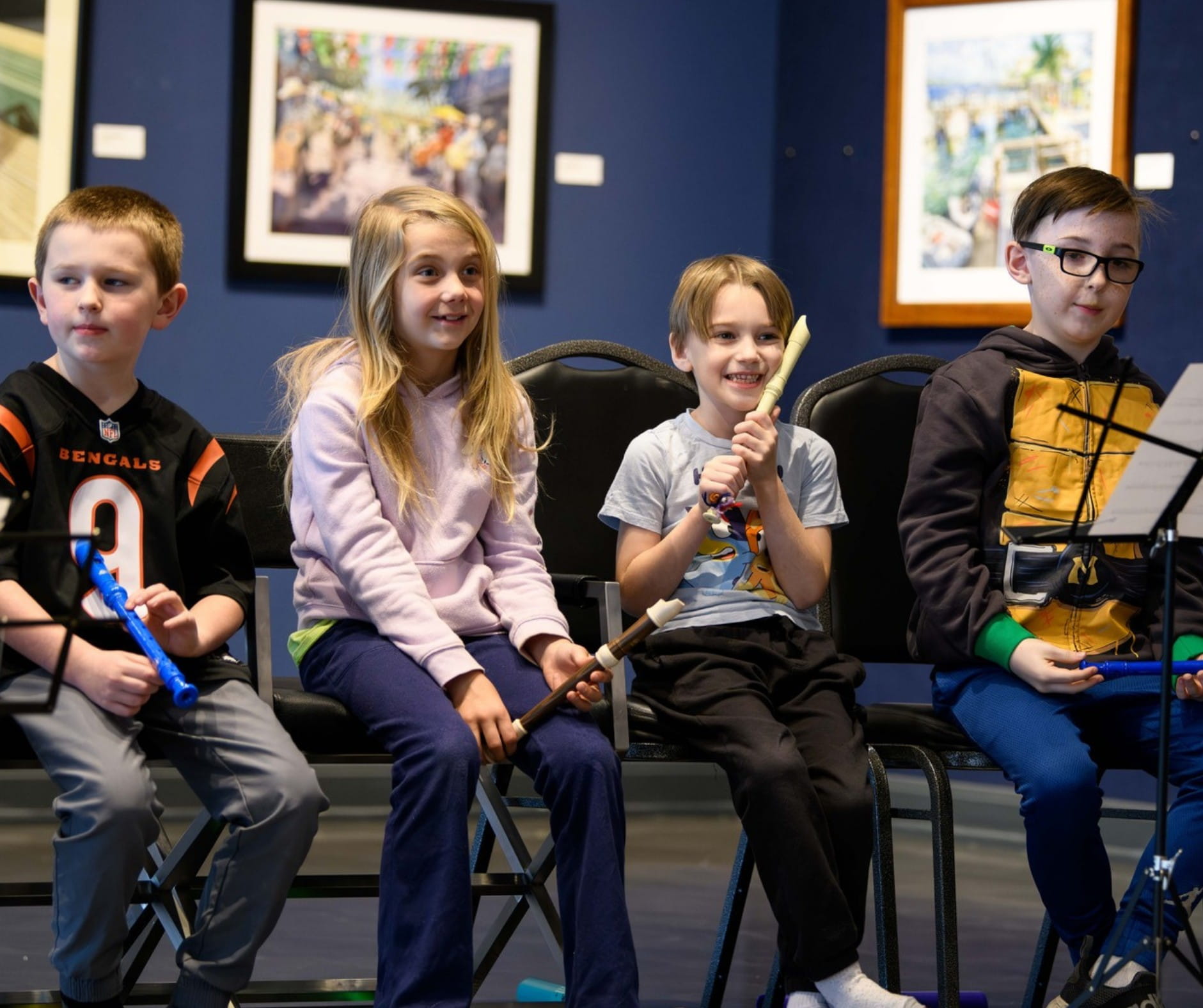
Education is woven into that work year-round. MCPA runs a wide mix of performing arts education programs—including youth theatre, school-day matinees, homeschool classes, camps, workshops, and adult offerings—that keep families returning season after season.
“A lot of these students and families have been with us for so long that we’ve built this family feel,” says Craig VanRenterghem, Education Director at MCPA. “It’s really special to watch them grow, build their confidence, and give them a sense of belonging.”
Education is a critical part of how MCPA builds trust with families, supports schools and invests in the next generation of arts lovers.
Craig oversees anything with an arts education component, from onstage youth productions to backstage technical learning. He explains that education sits at the heart of MCPA’s strategy. It’s a critical part of how the center builds trust with families, supports schools, and invests in the next generation of arts participants and supporters.
Program snapshot
- One full-time education staff member (Craig)
- Roughly 20 teaching artists working as independent contractors
- About 55 classes annually, plus camps, matinees, homeschool programs, and youth theatre
- Nearly 3,000 students and teachers reached in a single fiscal year across hosted and in-school programs
What they're optimizing for
MCPA’s north star is helping students feel a strong sense of belonging and connection to the space and its programs. Craig helps foster this experience by prioritizing relationship-building, which he describes as a core part of the job.
"The most important factor in our program's success is relationships."
“The most important factor in our program’s success is relationships,” he says. “By building trust with schools, families, our teaching artists, and our community as a whole, we can create programs that truly meet real needs.”

In practice, that focus shows up in a few consistent ways:
- Being active in the broader community. Craig takes the time to attend students’ school concerts, plays, and events. Families and schools see him regularly, which builds familiarity and trust over time. “I don't just want everyone to come here, I also want to be visible,” he says.
- Treating teaching artists as long-term partners. MCPA brings teaching artists into structured conversations about where the education program is headed. Once or twice a year, Craig works with them to reflect on what’s working, look at emerging trends, and ask bigger questions about how programs should evolve over the next decade. This shared planning helps teaching artists understand the long-term vision, beyond a single class or season, and see themselves as part of it.
- Working alongside community partners to extend what the center can offer. MCPA collaborates with organizations like the Findlay-Hancock County Public Library and the Library Speakers Consortium to co-host virtual author talks with bestselling authors and thought leaders. These partnerships allow MCPA to expand its educational reach without stretching internal staff, while staying closely aligned with what the local community is already engaging with and asking for.
This relationship-first approach is why students feel comfortable bringing family members back into the space and claiming the center as their own.
“I’ve seen some students come to shows and get excited to show their grandma every spot at the center,” Craig says. “It’s really special to see.”
Belonging is the outcome, but relationships are the work that makes it possible.
Looking ahead
As MCPA looks toward 2026, one signal that’s driving future planning is demand. Summer programs, in particular, have been filling up fast, with waitlists growing year after year.
“We’ve noticed throughout the years that we’ve been getting larger waitlists for our summer activities,” Craig says. “That tells me there’s a want for more summer programming.”
The organization is also beginning a long-term strategic planning process to define a ten-year vision, with education positioned as a core part of the mission.
“The goal is around how we can expand our programming so every student that wants to participate gets an opportunity,” he explains.
To support this work, Craig leans on professional networks, including connections with other arts education leaders and Theatre for Young Audiences peers to learn how others are navigating similar questions.
Takeaways you can apply
MCPA’s experience points to a few key lessons:
- Strong relationships keep programs running, and families coming back. To make space for relationship-building, automate what you can with the right technology. Use scheduled reminder emails, confirmation messages, and waitlist notifications so staff can prioritize connection over coordination.
- Trust and consistency build demand. Programs fill when families know what to expect and who they’re working with. Support this with regular, responsive communication and clear program timelines. Also consider featuring instructors in emails, on your website, and in social posts so families recognize familiar faces.
- Showing up regularly in the community builds confidence over time. Attending school concerts, community events, and partner programs reinforces long-term commitment. An internal shared calendar can help track these moments.
Orlando Shakes: Designing for Inclusion at Every Level
Orlando Shakes has served Central Florida for more than three decades. Founded in 1989 in partnership with the University of Central Florida, the theater produces classic, contemporary, and children’s plays while running a robust, year-round performing arts education program that reaches students across the region.
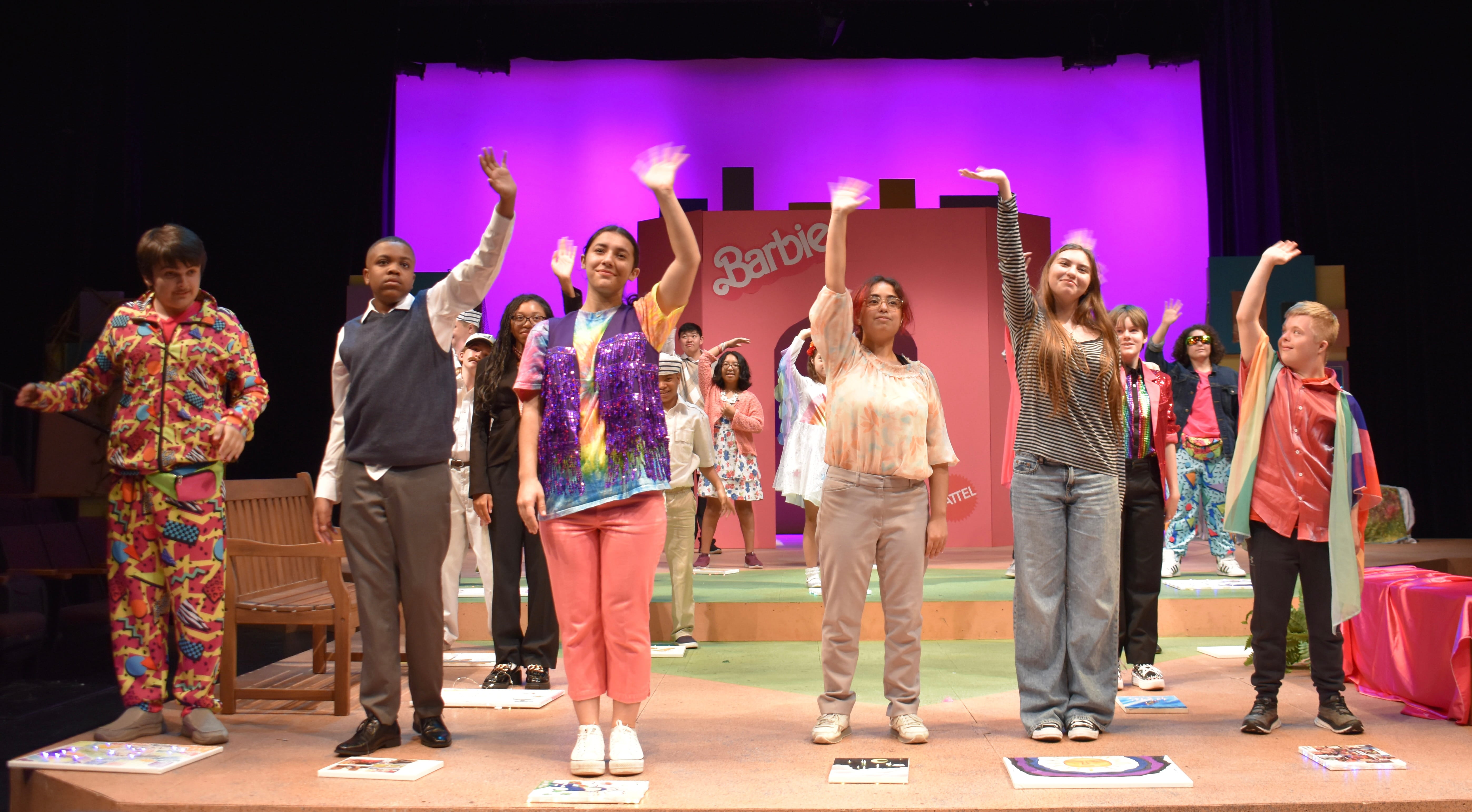
Education is a core part of that work, accounting for roughly one-third of the organization’s mission.
“We’re a community service organization, and part of serving the community is serving the youth [with educational programming],” says Anne Hering, Director of Education.
Anne works alongside Keith Traver, Education Coordinator, to oversee classes, camps, school workshops, apprenticeships, and inclusive flagship programs like Shakespeare With Heart and The Young Company. Many of these programs intentionally serve neurodivergent and neurotypical students together.
The goal isn't to train future Broadway performers. It's to teach life skills through theater.
Orlando Shakes’ goal isn’t to train future Broadway performers. It’s to teach life skills through theater and create an environment where students and families feel safe and supported, year after year.
Program snapshot
- Two full-time education staff members
- Teaching artists supported by rotating interns
- Youth classes, summer camps, adult classes, and school workshops
- Flagship programs, including Shakespeare With Heart and The Young Company
What they're optimizing for
At Orlando Shakes, the education team makes decisions with four priorities in mind: inclusion, consistency, dependability, and trust.
Orlando Shakes intentionally brings together students with and without disabilities, grounded in the belief that students of different abilities and backgrounds learn better together. However, creating this kind of shared space requires clear structures and realistic limits. For example, like many performing arts organizations, Orlando Shakes operates with limited campus space, which directly shapes program design.
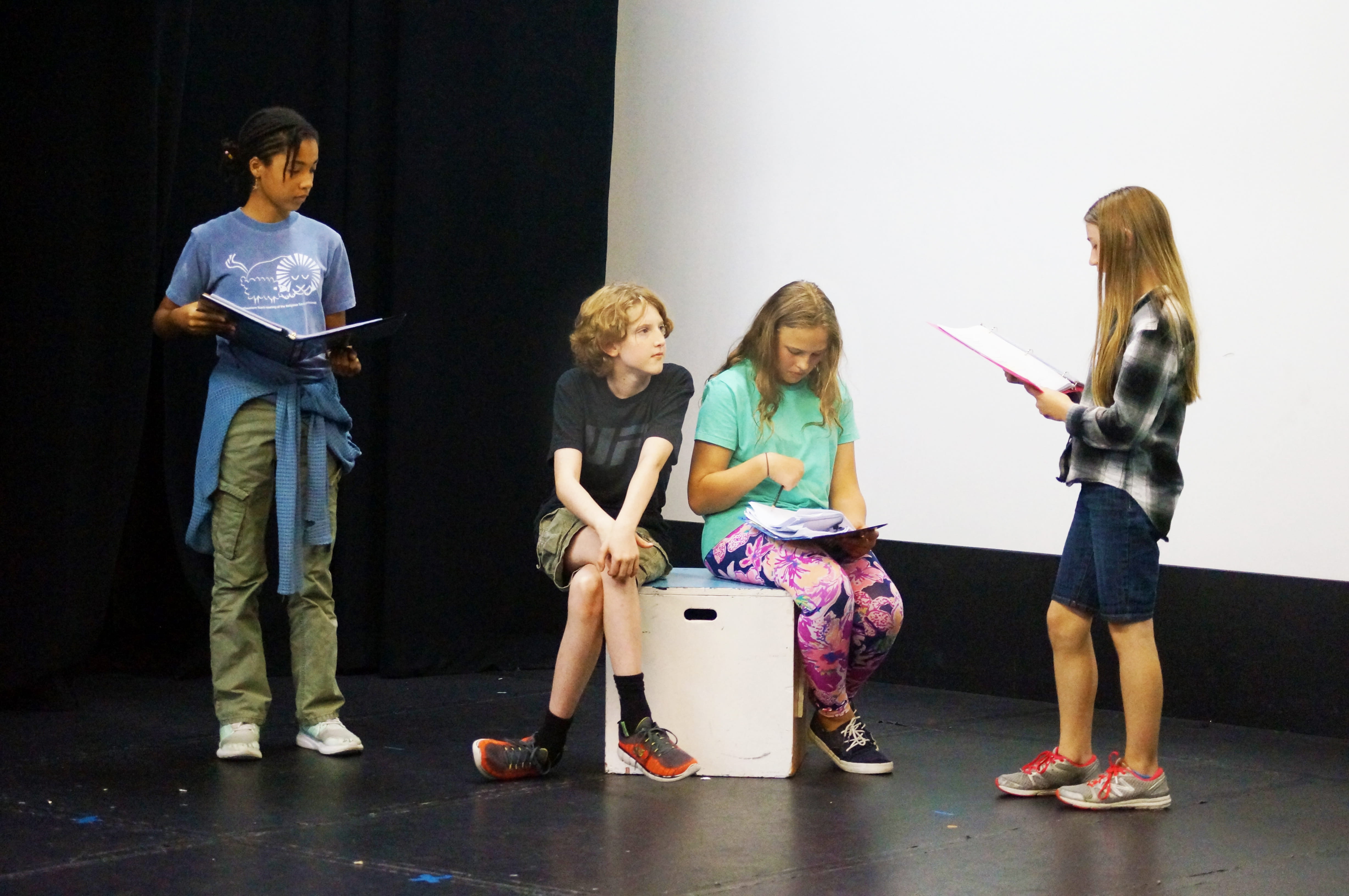
Here’s how they make inclusion work in practice:
- Keeping class sizes intentionally small so students with different learning needs can participate fully without getting lost in the room.
- Maintaining high teacher-to-student ratios, often pairing two lead teaching artists with additional interns to provide extra support when needed.
- Using interns as added coverage. Camps often include two teachers and two interns for groups of around 16 students to ensure all participants get the support they need, especially students with disabilities.
- Centering ensemble work and teamwork, allowing students to practice collaboration, empathy, and communication in mixed-ability groups.
How they build trust with families and schools:
- Creating predictable routines through consistent check-ins and closures, helping students transition into the work and leave it feeling grounded.
- Supporting classroom teachers directly with resources. Keith shared that educators often say they get just as much out of Orlando Shakes' workshops as their students do, which strengthens long-term school partnerships.
Looking ahead
After nearly 20 seasons as Director of Education, Anne Hering is preparing to retire later this year so succession planning is top of mind. The priority is maintaining program quality and consistency as leadership transitions, and ensuring the systems and rhythms she’s built can carry forward with Keith and the rest of the team.
Beyond staffing, Orlando Shakes is also working to smooth out a familiar seasonal challenge. Summer camp enrollment often surges in January, goes quiet between February and April, then picks up again in May. The organization has limited marketing resources shared across education and live performance, which makes it difficult to keep summer programming top of mind.
The team works to announce summer programming as early as possible so they can maximize the natural interest spike in January. They anticipate the slower months and ramp up marketing in May, including sending brochures to schools, to align with the secondary spike.
To support their day-to-day work and future-planning, Anne and Keith rely heavily on peer networks, from teaching artist communities to education-focused groups like the International Shakespeare Association, using regular conversations to troubleshoot shared challenges and exchange ideas.
Takeaways you can apply
Here are a few moves from Orlando Shakes’ playbook to consider, particularly if inclusive programs are a focus for your organization:
- Treat limited space as a design tool, not a drawback. Smaller rooms make it easier to set clear enrollment caps, maintain high teacher-to-student ratios, and deliver a consistent experience. Instead of squeezing in more students, design programs around what your space can genuinely support well.
- Build inclusion into staffing plans. Inclusive programs require enough adults in the room. Orlando Shakes uses a mix of lead teaching artists and interns from UCF’s theatre program to provide extra coverage, especially for students with disabilities. Consider partnerships with local universities, theater programs, or education departments to create internship pipelines that support both learning and capacity.
Playhouse Stage Company: Education as a professional launchpad
If Orlando Shakes shows how theater can support broad life skills, Playhouse Stage Company shows what’s possible when you lean into performing arts education as professional development.
Founded in 1989 as a free outdoor summer theater in Albany’s Washington Park, Playhouse Stage Company has grown into one of the Capital Region’s most active producing organizations.
Today, it mounts more than a dozen professional productions each year. It also runs Playhouse Stage Academy, a year-round performing arts education program serving roughly 3,500 students annually across classes, camps, touring shows, and productions.

Education and professional work are closely linked here. Students learn from and work alongside working artists, both in classes and productions.
“It’s to the students’ benefit to be training with people for whom the pursuit of the arts is their job,” says Owen Smith, Producing Artistic Director.
Playhouse Stage’s education leaders are living proof. Owen was a student at Playhouse Stage himself, and AshleySimone Kirchner, Director of Education and Associate Artistic Director, started as a dancer in the ensemble. Many instructors and staff members are former students who now work professionally in the field.
The result is a performing arts education program that treats proximity to real professional work as a teaching tool, helping students understand what’s possible and what it takes to get there.
Program snapshot
- Education staff of five
- Year-round classes, camps, productions, and touring shows
- Roughly 3,500 students served annually
- A strong alumni pipeline into paid roles and professional opportunities
What they’re optimizing for
At Playhouse Stage Company, students train inside the same ecosystem that produces professional theater.
“We integrate everything so closely with our professional productions and staff,” says AshleySimone Kirchner. “Students get the opportunity to work alongside people who are working on Broadway, off-Broadway, and on TV.”
How Playhouse Stage brings this to life:
- Paid professional staff. Education is led and taught by paid artists, which allows for consistent instruction, accountability, and long-term student support that volunteer-led models can’t sustain.
- A standalone education ecosystem. Playhouse Stage Academy operates as its own branded program, with clear pathways from early training through advanced, pre-professional experiences.
- High-level training tied to real work. Students study acting, voice, movement, and audition technique while working alongside professionals on productions.
As a result, students see how training connects to real opportunities. The organization also builds a reliable pipeline of artists who already understand its standards, pace, and values.
Education and production strengthen each other because they’re built to operate together.
Looking ahead
At Playhouse Stage Company, the priority heading into 2026 is stability in an uncertain industry, paired with steady, sustainable growth.
One way the team is building long-term momentum is by offering classes for younger people to build momentum.
One way the team is building long-term momentum is by offering classes for younger people to build momentum. Over time, Playhouse Stage has lowered the entry age for its education programs, creating a longer runway for relationships to form.
“Once you build buy-in and trust with people at a young age,” Owen says, “that becomes much easier to maintain over time.” Their strongest enrollment growth has come from these younger cohorts, who often stay connected for years.
The team also works to maximize on-site interactions to solidify relationships. Lobby postcards, curtain speeches that spotlight students, and small rituals during performances help turn audience members into future participants. As Owen puts it, there’s no stronger funnel than people who are already in the building.
Playhouse Stage also continues to remove friction for families wherever possible. Ease of registration matters, especially for households enrolling multiple children. Familiar systems, saved profiles, and flexible payment options make it easier for families to recommit year after year, supporting both retention and long-term stability
.png)
Lastly, Ashley is experimenting with practical, low-cost course promotion tactics, from word-of-mouth to social media marketing. Professional development and resources often come through staff members’ own production work and through national networks like Theatre Communications Group and the Association of Performing Arts Professionals.
Takeaways you can apply
Playhouse Stage shows how proximity to professional work is geared towards building future artists and art professionals. If your program's goals are centered around professional development, consider:
- Seeing a viable path matters as much as the training itself. The idea of a career in the arts becomes more concrete when students work alongside professionals.
- Professional ecosystems can start inside your own organization. Employing former students as actors, creatives, and staff shortens the distance between learning and doing.
Showing the value of education your community
Education programs do a lot of work behind the scenes. The challenge is making that work visible, especially to boards, funders, and internal teams who aren’t in the room every day.
Across the organizations we spoke with, a few practices come up again and again:
Pair numbers with stories
Enrollment totals and attendance data matter. So do the voices behind them. At Marathon Center for the Performing Arts, storytelling is a core part of how they communicate impact.
“Data does help guide decisions, but it’s also the experiences of the students and our teaching artists,” says Craig.
Use performances as proof points
Final showcases and productions show what students have actually learned. You can see their growth in real time, in ways reports can’t capture.

“Seeing students shine is the most powerful way that we can communicate the value of what we do,” Craig adds.
Keep track of former students’ journeys
At Playhouse Stage Company, alumni stories show long-term impact. Owen notes that former students have gone on to Broadway, touring productions, regional theaters, film, and television, even if those wins aren’t always widely shared.
Education is a growth tool for the performing arts
Education has become one of the most reliable ways for arts organizations to stay relevant and connected. It isn’t a side effort or a “nice to have”. It’s a core part of building deeper community relationships, trust, and long-term engagement.
There’s no single right model for performing arts education. What matters most is clarity about who programs are for and what they to support. Start with what your team can sustain well and grow from there.
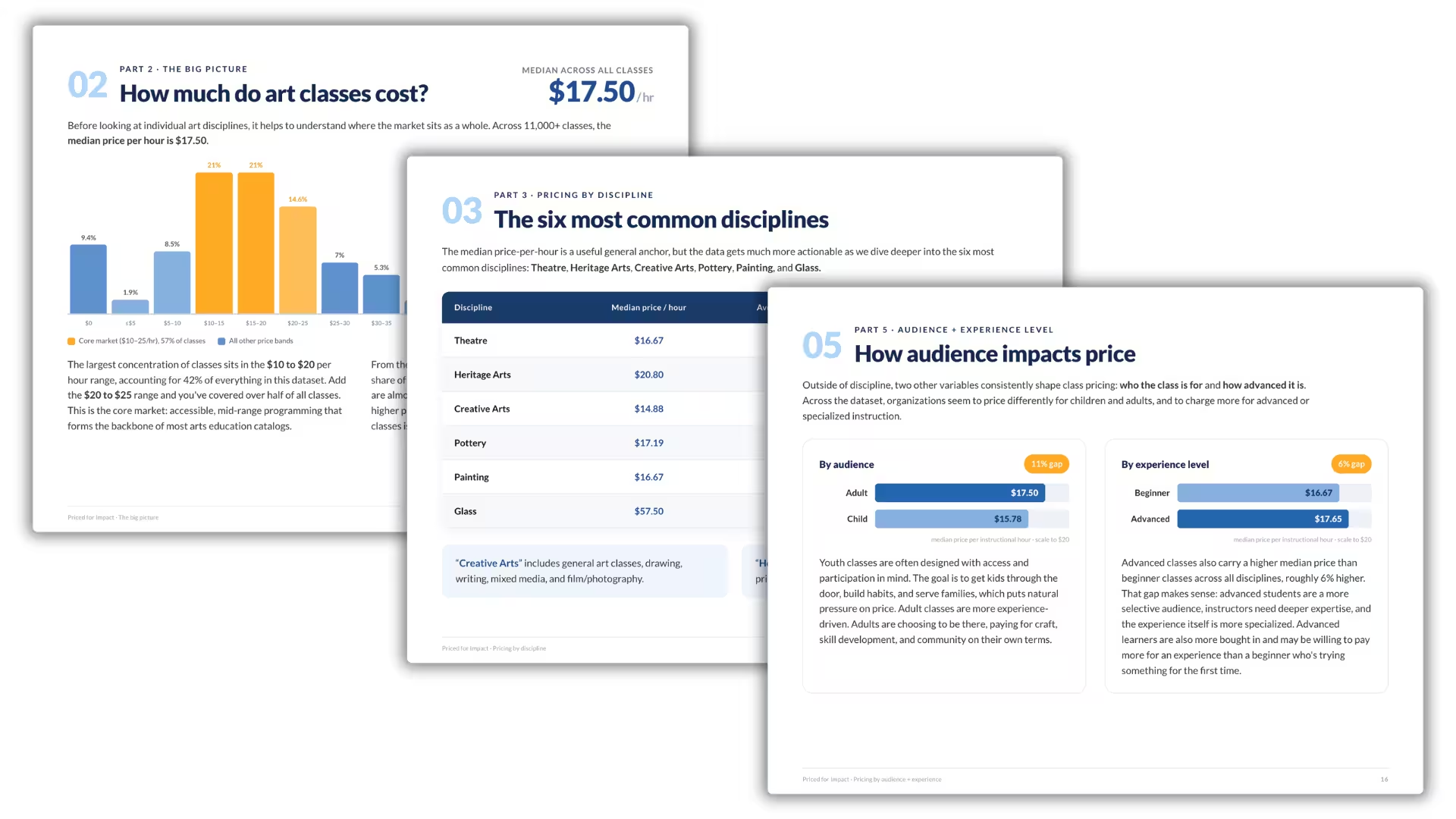
Looking to take your education program to the next level? Get our 5-step guide to build a thriving arts education program based on what we've seen work across hundreds of arts organizations. Get your free copy today.
Save time and grow your impact with CourseStorm

